
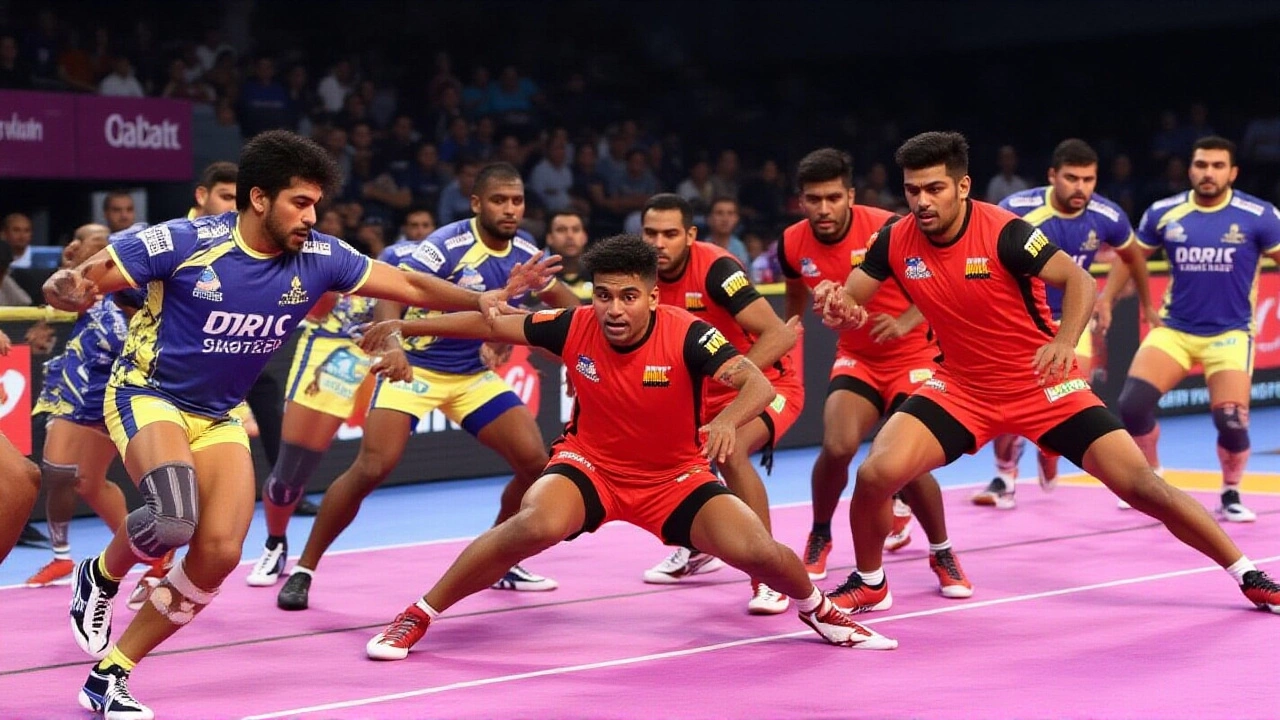
When Dabang Delhi K.C. clinched a historic win over Puneri Paltan at the Vishwanadh Sports Club in Visakhapatnam (Vizag), the Pro Kabaddi League witnessed its first ever Golden Raid decision. The showdown, part of PKL Season 12India, ended 28‑28 after regular time and a 5‑5 shoot‑out, forcing a sudden‑death raid. It was Ashu Malik who stepped up, converting the Golden Raid into a match‑winning point while also posting a Super 10 for the night.
Golden Raid Makes History
The Golden Raid rule was introduced to eliminate dead‑locks that have long frustrated fans and players alike. In this first application, Dabang Delhi K.C. won the toss that decided which side would take the decisive raid. Malik’s swift, all‑out charge left the Puneri defence scrambling, and the scoreboard finally tipped in Delhi’s favour at 29‑28. "It was a tough match from the start to the end. They had a very good defence. At the end, they had a lead of 2‑3 points. Both teams were competing hard and we didn't expect that the match would go to the golden raid. We felt good, our luck was good that we won the toss and the match," Malik said after the victory.
How the New Tie‑Breaker Works
When scores are level after the usual 40‑minute stretch, PKL now initiates a five‑raid shoot‑out. Each side fields seven players, but only five distinct raiders are allowed to attempt a raid, alternating turns. The baulk line doubles as the bonus line, meaning any raid that reaches it scores a point without needing a full cross. Out‑and‑revival rules are suspended – only the points earned in those five raids matter.
If the shoot‑out also ends in a dead‑lock, the Golden Raid kicks in. A fresh coin toss determines which team gets the single, sudden‑death raid. The raider must score – a touch, a bonus or a technical point – to lock in the win. Should both teams somehow remain even after that, a second toss decides the champion, preserving drama while guaranteeing a result.

Reactions from Players and Fans
Defensive stalwart Fazel Atrachali, who notched a High Five for Puneri Paltan, was quick to praise his teammate’s heroics. "At 5‑5, I was not worried. I knew that we would win the match because we have too many good players like Ashu. He is our game changer," Atrachali observed, adding that the Golden Raid will likely become a fan favourite. "The public will enjoy it. The tie‑breaker adds closure to a match that would otherwise end in a tie," he added.
Social media lit up with clips of the final raid. Viewers described the moment as “edge‑of‑the‑seat” and “the kind of drama that makes kabaddi a blockbuster sport.” The league’s digital platforms reported a 32 % spike in live‑stream engagement during the Golden Raid, underscoring the rule’s immediate appeal.
Broader Changes to PKL Season 12
Beyond the Golden Raid, Season 12 rolled out several format tweaks aimed at simplifying the competition and widening the playoff race. The points table now awards a flat two points for a win and zero for a loss, scrapping the old bonus‑point nuances that often confused casual viewers. This clarity is already reflected in tighter league‑stage battles, as teams jostle for the newly created Play‑in slots.
For the first time, the top eight squads after the league stage will advance to the Play‑offs, a jump from the previous six‑team cut. The Play‑ins act as a mini‑tournament, giving lower‑ranked teams a lifeline and ensuring that every match carries heightened stakes. The Do‑or‑Die Raid, Super Raid, Super Tackle and other classic kabaddi nuances remain in force, preserving the sport’s traditional strategic depth.
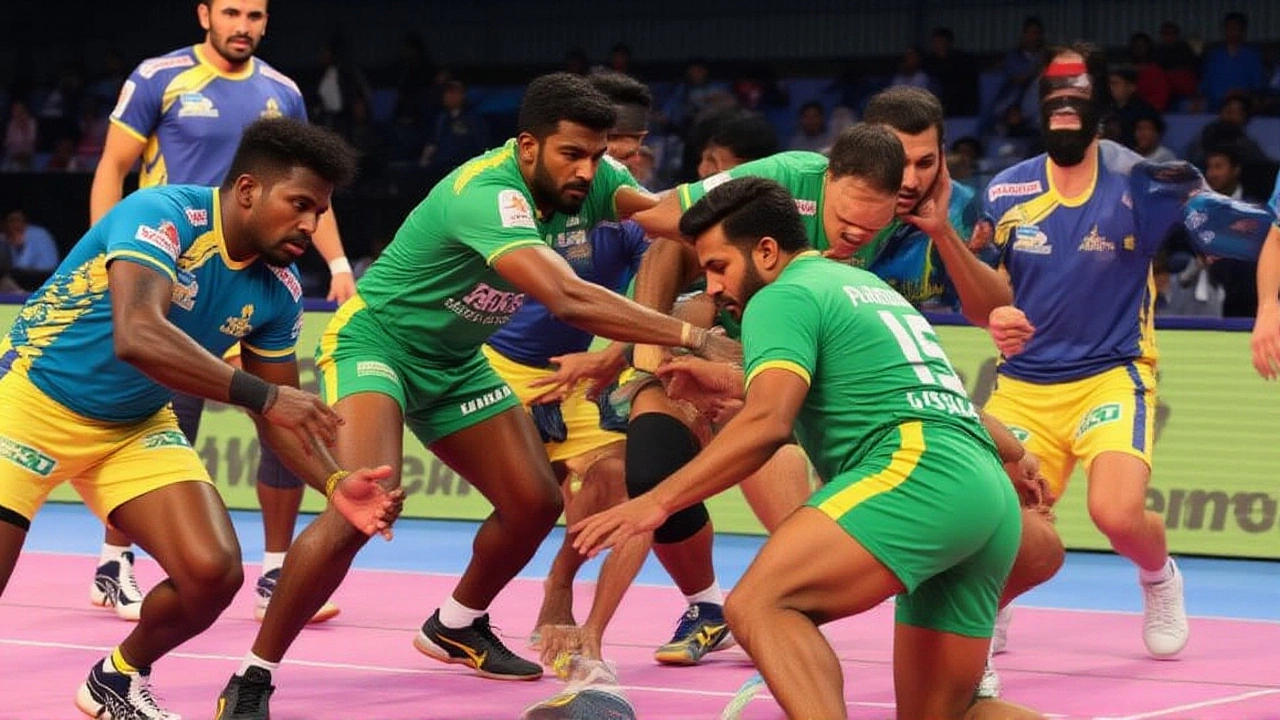
What This Means for Kabaddi’s Future
Analysts say the Golden Raid could become the defining hallmark of modern PKL, aligning the league with other global sports that favour decisive outcomes – think cricket’s Super Over or football’s penalty shoot‑out. By guaranteeing a winner, broadcasters gain a more marketable product, while sponsors appreciate the increased viewership spikes.
Coaches, however, will need to recalibrate strategies. Training now includes specific “Golden Raid drills,” focusing on high‑pressure single‑raid scenarios. Teams may also adjust squad rotations to ensure they have five reliable raiders ready for a potential shoot‑out, adding a new layer to roster construction.
For the fan base, the rule promises closure. As Atrachali noted, “Whenever there is a tied match, they perhaps didn't get closure previously.” With the Golden Raid, the narrative wraps up neatly, turning a potentially anticlimactic draw into a memorable climax.
Frequently Asked Questions
How does the Golden Raid differ from the earlier shoot‑out?
The shoot‑out gives each side five raids, and the team with the most points wins. If those raids end level, the Golden Raid is a single, sudden‑death raid decided by a toss. Only the raider who scores in that moment secures the match.
Which teams benefited from the new points system?
All teams now see a clearer picture of where they stand. A win instantly adds two points, eliminating the previous 1‑point bonus for a narrow victory. This simplicity helped mid‑table sides like Tamil Thalaivas track their playoff chances more accurately.
What impact does the Golden Raid have on player preparation?
Coaches are now incorporating high‑pressure raid drills. Players practice single‑raid scenarios with limited time, focusing on quick decision‑making and explosive footwork, because a Golden Raid could decide a championship game.
Will the Golden Raid be used in knockout matches?
Yes. The rule applies across the league stage and knockout rounds. In a recent semi‑final, the new Play‑in format also triggered a Golden Raid, confirming its role as the ultimate tie‑breaker throughout the tournament.
How have fans reacted to the Golden Raid?
Social‑media sentiment turned overwhelmingly positive. Viewership data showed a 32 % spike during the first Golden Raid, and fan polls conducted by the league indicated that more than three‑quarters of respondents prefer the new rule to traditional tie‑breakers.
