
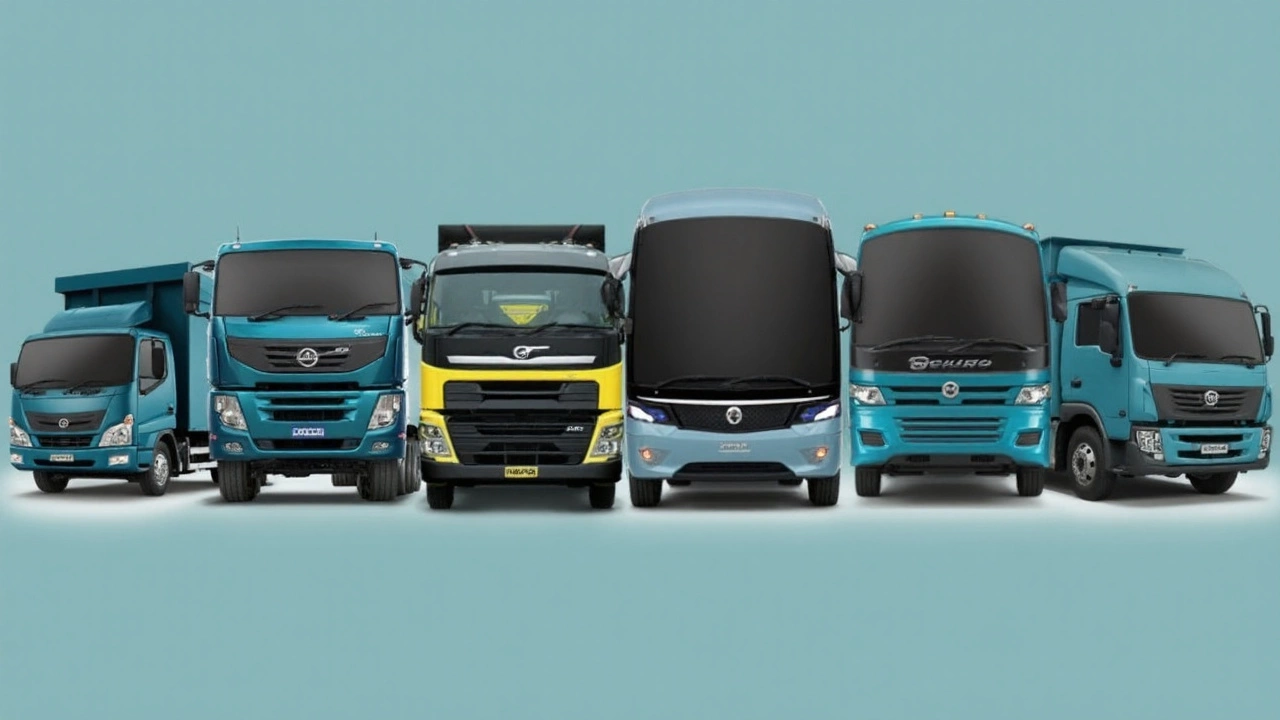
Trucks and buses just got cheaper: VECV passes full GST 2.0 benefit to buyers
A 10-point tax drop hardly ever happens in autos. That’s why VE Commercial Vehicles (VECV)—the Volvo Group and Eicher Motors joint venture—moving to pass on the entire GST rate cut to customers is a big deal. Starting September 22, 2025, right in time for Navratri, buyers of diesel, CNG, and LNG commercial vehicles will see on-road prices fall as the GST slab drops from 28% to 18%. Electric trucks and buses continue at the lower 5% GST.
The sticker impact is not small. VECV expects cuts of up to ₹6 lakh on trucks and ₹1.1–₹3.4 lakh on buses, depending on the model and configuration. The company’s managing director and CEO, Vinod Aggarwal, welcomed the move, calling it timely relief after months of softer demand and rising input costs. For fleet owners squeezed by fuel, tires, and finance, this is a clean reduction straight on the invoice.
This follows the GST Council’s approval of the “GST 2.0” reforms on September 3. While the headline change is the tax cut on internal combustion commercial vehicles, the Council also lowered GST on third-party insurance for goods carriers from 12% to 5%. For truckers renewing policies, that’s another small but certain saving on operating costs.
VECV isn’t alone. Tata Motors and Mahindra have also said they’ll pass the full benefit to customers, setting up a festive season where commercial vehicle price lists reset across the board. Expect dealers to push quick deliveries and pre-approved financing to convert interest into bookings.
What changes with GST 2.0—and what it means on the ground
First, the math. A simplified example shows why buyers are paying attention. Suppose a mid-duty truck has an ex-factory price of ₹25 lakh. Under the old 28% GST, the tax was ₹7 lakh, taking the price to ₹32 lakh before state levies and registration. With 18% GST, the tax falls to ₹4.5 lakh—₹2.5 lakh straight off. Add in the cascading effect on insurance (GST on third-party now 5%), and the final on-road saving climbs further. On larger tractor-trailers or premium buses, the benefit scales up, which is how you get to ₹6 lakh peak reductions on some trucks.
A couple of caveats. State road taxes, fitness and permit fees, and municipal levies don’t change with GST. Those are separate and still apply. But the base on which they’re calculated is now lower, so your total on-road bill still falls meaningfully.
For operators, the bigger story is cash flow. A lower on-road price reduces down payment and EMI. If the truck’s price drops by, say, ₹3 lakh and you finance 85%, your upfront cash can fall by ₹45,000 or more, and monthly EMI by a few thousand rupees depending on tenure and rate. For small fleet owners and owner-drivers, that can be the difference between holding off and buying now.
There’s also a replacement cycle angle. Many fleets postponed purchases over the last year because of higher vehicle prices and uneven freight demand. A neat 10 percentage points off GST resets payback calculations on newer, more fuel-efficient trucks. Better mileage, lower downtime, and longer service intervals can now add up faster against older trucks, especially where routes are long haul and loads are predictable.
On the bus side, the cut could nudge state transport undertakings (STUs) and private operators to refresh fleets. Intercity coaches and staff buses have felt the pinch of rising acquisition costs and thin margins. Lower upfront prices stretch procurement budgets further. Expect staggered tenders or faster call-offs on existing rate contracts as STUs try to lock in the new economics.
What about electric commercial vehicles? They continue at 5% GST. That’s still the lowest slab, keeping the total cost advantage on taxes with EVs. But the overall gap between a diesel/CNG bus and an electric bus narrows slightly in percentage terms. The real swing factor for EV adoption remains total operating cost—energy price, battery life, and charging uptime—rather than just purchase tax.
Insurance is a quiet but real win. Third-party premiums for goods carriers attract GST; cutting it from 12% to 5% trims the cheque at renewal. Base premiums are set by the regulator, but the tax slice is lower now. Over a five-year horizon, that adds up across a fleet.
Zooming out, the macro effects look meaningful. Logistics costs in India are commonly estimated around 13–14% of GDP. One of the big goals of the PM Gati Shakti programme is to push that closer to single digits through better infrastructure, multimodal connectivity, and smoother policy. Cheaper vehicles don’t fix bad roads or port delays, but they do lower capital costs for the trucks and buses that actually move the goods and people. In a price-sensitive market, that can lift fleet utilization and speed up replacement of older, less efficient vehicles.
Will freight rates fall? In the near term, don’t expect a straight line from vehicle taxes to spot rates. Freight pricing moves with diesel, demand-supply, and seasonality. But as capital costs come down and fleets modernize, operators have more room to compete on large contracts and offer better service levels—higher uptime, telematics-driven routing, and predictable delivery windows. That’s where shippers feel the benefit.
For the component ecosystem—engines, axles, tires, electronics—higher vehicle volumes are the big prize. Suppliers took a hit when sales slowed, even as input costs stayed sticky. A festive-season bump followed by a steadier run rate through the fiscal could help normalize factory schedules and working capital cycles.
There’s a secondary market angle too. When new trucks get cheaper, used truck prices usually adjust. The spread between a four- to six-year-old truck and a new unit may widen in rupee terms, nudging some buyers toward new purchases, especially when finance is available. Dealers might respond with exchange bonuses or buyback guarantees to keep the used market liquid.
How should buyers approach this window? A few practical pointers:
- Ask for revised ex-showroom and on-road quotes dated after Sept 22 to ensure the GST benefit is reflected.
- Check if the offer applies to in-stock units or only fresh factory dispatches. The benefit should apply across the board, but stock timings matter for invoicing.
- Rework finance. Lower price means lower EMI. Consider slightly shorter tenures if cash flow allows—it reduces total interest paid.
- Review insurance. With GST on third-party at 5%, compare bundled dealer insurance versus going direct. The numbers may have shifted.
- Don’t skip specs to chase price. Newer engines, better telematics, and safety features can pay back quickly on fuel and downtime.
For VECV, the timing is strategic. Navratri to Diwali is the peak buying window when transporters add capacity ahead of holiday demand and year-end cargo flows. Eicher-branded light, medium, and heavy-duty trucks, along with select Volvo heavy-duty models sold via the JV, will likely headline the discounts. Expect marketing around total cost of ownership, fuel economy, and uptime services—areas where fleets make or lose money every day.
Competition won’t sit out. Tata and Mahindra have already signaled full pass-through. Ashok Leyland will be under similar pressure to align. When all major OEMs cut prices at once, the market tends to grow rather than just shuffle share—assuming freight demand holds and financing is available.
Speaking of finance, lenders have room to be more flexible when asset prices drop. Lower loan-to-value risk and improved resale prospects on newer models can support approvals for smaller operators who were borderline earlier. Expect NBFCs to roll out quick-sanction products and top-ups for fleet upgrades, especially in high-freight corridors.
Policy alignment is another subplot. The GST cut dovetails with broader aims: cleaner fleets, safer highways, and faster goods movement. It pairs well with ongoing scrappage efforts and tightening fitness norms. While the scrappage ecosystem is still maturing, a cheaper new truck plus some scrap value can make the math work for older, high-maintenance vehicles.
There will be side effects to watch. A sudden rush of orders can strain supply chains—especially tires, castings, and electronics—leading to longer waiting periods on popular models. If that happens, some discounts may pivot from price tags to service bundles or accessories. Also, used truck dealers may take a few months to reset pricing, creating temporary mismatches in the exchange market.
From an inflation perspective, any cooling in logistics overheads helps. Cheaper capital costs for fleets don’t immediately show up in CPI, but they ease pressure in the value chain. For exporters moving heavy goods—engineering, chemicals, agri—reducing per-tonne transport cost improves pricing power abroad. The benefits here are cumulative and take time, but they’re real.
For now, buyers have a clear line of sight: lower GST, lower insurance tax, and OEMs publicly committing to pass the gains through. VECV’s move sets the tone. If you were on the fence about adding a truck or upgrading a bus, the numbers just tilted in your favor.
